Carson Drew
The Hidden StaircaseCarson Drew is a lawyer from River Heights and Nancy Drew’s father. His professional judgment first places him in conflict with Nathan Gombet over land taken for a railroad right of way; later, Gombet turns that old dispute into the pretext for abducting and extorting him. Carson’s ordeal makes Nancy’s investigation personal, while his rescue and final decision to hand her his mystery cases establish her as his professional successor.
Identity and Background
Carson is introduced as an established lawyer, away from home because an important law case has called him out of the city. His absence leaves Nancy alone in the house with Hannah Gruen away for the day. The story therefore first presents him through his responsibilities and absence, before his dispute with Gombet brings him into the foreground. He is also identified as a lawyer from River Heights, a professional reputation that Nancy invokes when she seeks the sheriff’s help.
Carson had served on the land commission that handled the acquisition of Gombet’s property for a railroad right of way. He says the commission paid Gombet well, and that Gombet initially seemed satisfied with the settlement. After a bridge was built, however, Gombet began demanding additional money, claiming that the bridge had damaged the remainder of his property. Carson considered those complaints unreasonable and did not give them much attention. The unresolved dispute is thus not presented as a new disagreement: it is a past public decision that Gombet revisits and recasts as a personal wrong.
The Dispute with Nathan Gombet
Carson’s first account of the land conflict also reveals its growing menace. Nancy tells him that Gombet has made ugly threats, including talk of blowing up the bridge. Carson responds with concern and says that he should keep an eye on Gombet, though his attention to the threat does not prevent Gombet from approaching him directly. The bridge dispute supplies a real grievance in the plot, but Gombet’s subsequent conduct separates a claim for compensation from the unlawful methods he uses to pursue it.
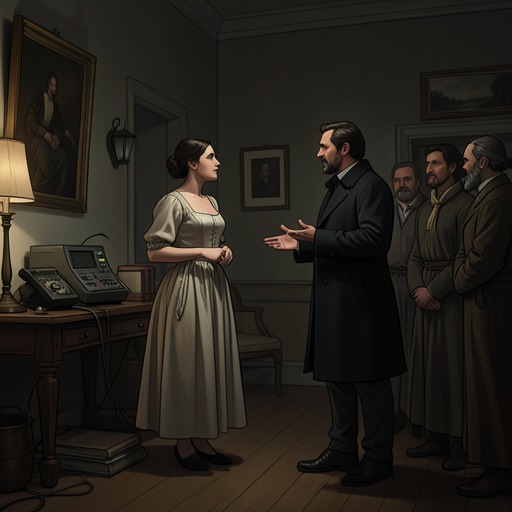
When Gombet says that he wants his rights, Carson challenges what he means by the term. Gombet claims that his land was worth several times what he received and demands either the deed back or a higher price. Carson connects that demand to Gombet’s earlier attempt to rummage in his desk for the deed, and warns that obtaining it would not help him. The exchange establishes that Gombet has shifted from complaining about the settlement to trying to recover the document and force a new payment. Carson’s response is firm, but the dispute does not end through negotiation or legal process: Gombet instead devises a deception to get Carson alone.
Abduction and Captivity
Gombet intercepts Carson with a false report that Nancy has been badly injured and needs him urgently. Alarmed by the claim, Carson grasps Gombet’s arm and goes with him. They drive to the outskirts of Cliffwood, where Gombet turns into one of two large stone houses and says that he lives there. Carson is intent on reaching his daughter and does not inspect the house as he enters. Gombet leads him through the kitchen, where a servant is working; Carson misses the significant signal Gombet gives her as they pass, and she locks the outside door after the men have gone into the next room.
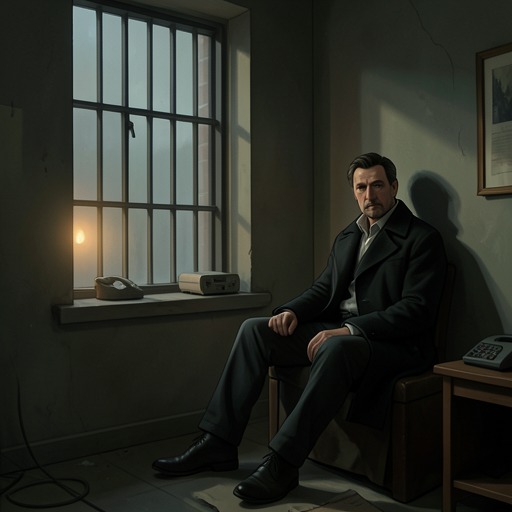
The promised sickroom is a dark room with its curtains drawn, and Carson realizes that it has the appearance of a prison. The daughter whose injury supposedly brought him there is not present: the emergency was a lure, and he has walked into a trap. Gombet then states the terms of his demand. He wants Carson to pay for the land, provide a check for $20,000, and sign a paper promising not to prosecute him; in return, he claims, Carson will be released. The demand makes the old property grievance an instrument of extortion, adding an attempt to secure immunity to the demand for money.
Carson is kept captive for several days. When Nancy and the sheriff eventually reach the room, they find him bound to a chair, pale and visibly weakened, while Gombet presses him to sign the paper. Nancy opens the door after hearing Gombet threaten Carson, advancing before the sheriff can reach the room. The scene exposes the two sides of Carson’s predicament at once: he is the target of Gombet’s coercion, and the document on the table records the terms Gombet has tried to impose.
Rescue and Family Relationship
After the confrontation, Carson explains that Gombet induced him to come to the house by trickery and had held him there for several days while trying to force him to sign over money. The sheriff identifies the paper as evidence of the attempted extortion; Carson confirms that it would have required him to hand over a large sum and promise not to prosecute. Gombet’s silence does not erase the circumstances in which the document was produced: the officers have found him with Carson and the agreement, and the sheriff says that he has been caught in the act.
Carson’s rescue follows the investigation Nancy has pursued in his absence. At the sheriff’s office, Nancy had named Carson as her father and invoked his standing as a lawyer from River Heights while pressing for action against Gombet. The sheriff had accepted the account but insisted that belief was not enough to justify an arrest without proof. The final discovery of Carson and the forced agreement supplies direct evidence of Gombet’s crime. After Gombet is taken away, two deputies help Carson downstairs, and he leaves with Nancy while the sheriff’s party takes both Gombet and his servant in the police car.
His condition makes clear that rescue does not instantly erase the ordeal. Carson empties a glass of water in one draught, and Rosemary Turnbull tells him that he does not look well enough to return to River Heights that night. He nevertheless thinks he can make the journey. His exchange with the Turnbull sisters occurs as they say goodbye after the arrests; Rosemary also says that the openings into the staircase will be boarded up, expressing the hope that Gombet’s imprisonment will end the danger to them.
Change and Narrative Role
Carson’s role changes sharply across the story. At first he is a busy professional whose absence leaves Nancy to respond to the mystery herself. He then becomes a victim of the case, held as leverage in the very dispute that had seemed to him an old and unreasonable complaint. At the end, he is again able to act as a father and professional mentor. Rather than merely praising Nancy’s conduct, he announces that he intends to turn his mystery cases over to her.
That promise gives the rescue a lasting consequence beyond the arrest. Carson’s captivity temporarily removes the established lawyer from the investigation; Nancy’s pursuit of the evidence brings the sheriff to the hidden criminal operation and ultimately to her father. His final confidence in her makes that reversal explicit: the daughter who had pressed for action in his absence is now to receive the cases that had belonged to him. Carson therefore serves both as the human stake of the mystery and as the figure whose recognition marks Nancy’s transition into a detective in her own right.